


Toshiba's wireless charging bus hits the road
2016-08-23 16:35

It is reported that Toshiba Corporation of Japan recently opened a shuttle bus between Tokyo Haneda Airport and ANA Center in Tonomachi, Kawasaki. In addition to being electric, the most eye-catching thing is that the bus does not require a wired charging pile, but uses wireless charging technology.
According to the test, this 45-seat bus can shuttle between two test points once with only 15 minutes of wireless charging, with a mileage of 11 kilometers. According to Toshiba, the battery capacity of this bus is about 52.9 kWh. When fully charged, the bus can travel up to 89 kilometers at a time, which is undoubtedly a very good result for wireless charging.
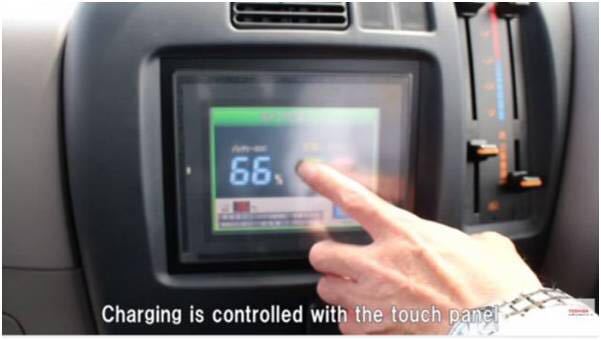
The wireless charging system was jointly developed by Toshiba Corporation and a team led by Yushi Kamiya, a professor at the School of Natural Sciences and Engineering of Waseda University in Japan. When charging is needed, the driver only needs to park the car in a predetermined location and press the button on the dashboard to start charging. Charging does not require connecting cables, and there is no risk of electric shock.
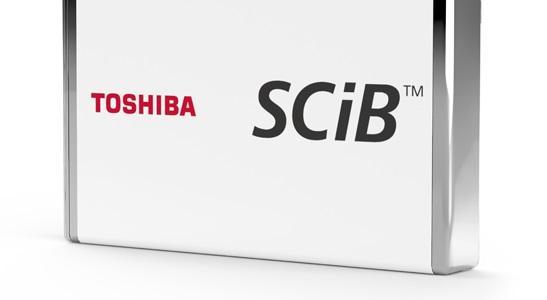
The bus battery uses Toshiba's patented SCiB (Super Charge ion Battery) technology, which is a super-chargeable lithium battery. This technology greatly improves the life and charging efficiency of ordinary lithium batteries. SCiB batteries can be charged to more than 90% in just 5 minutes. At the same time, after repeated charge and discharge 15,000 times, the power degradation level is less than 10%. In addition, this technology also has very good stability. SCiB batteries can discharge normally in a low temperature environment of minus 30 degrees Celsius.
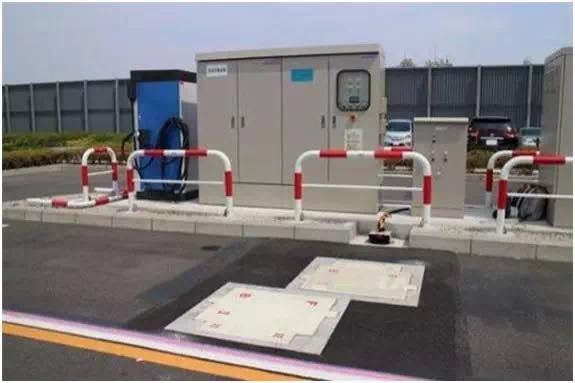
In addition to the battery itself, this test is also different in terms of wireless charging technology. Traditional electromagnetic induction wireless charging requires a high degree of fit between the battery and the charging base, not only requiring relative position alignment, but also requiring as little spacing as possible between the charging transmitter base and the receiver, and the best effect is to be close together. In contrast, the wireless charging system tested by Toshiba this time uses the principle of magnetic resonance. This magnetic resonance wireless charging technology does not require the charging base and the battery to be highly fitted. Toshiba's tests show that the relative position of the charging base and the SCiB battery can be up to 20 cm wide in the horizontal direction and up to 10 cm in the vertical direction. In addition, the spacing between the charging transmitter base and the receiver does not have to be closely fitted, as long as the relative distance does not exceed 10 cm, normal charging can be achieved. In addition, the test results show that the system's radio emission level meets the requirements of local regulatory regulations and will not affect nearby wireless signal transmission.
According to Toshiba, the shuttle bus will continue to be tested until December 2016, with three round trips a day, mainly for the commuting needs of ANA employees. At the same time, some media said that this type of wireless fast charging bus has a very broad application prospect in specific areas (such as tourist attractions, airports, etc.), because the shuttle bus is frequently used and does not need to travel far at a time, and the wireless charging method is also safer, more convenient and environmentally friendly.
SHANGHAI YCT ELECTRONICS GROUP CO., LTD
Business Phone: 86 (21)-51516111
Business E-mail:office@yctexin.com
Company Address: No.62, Lane 99 Chunguang Road, Shanghai, China
Landline
Scan and follow us
Get more electronic product informatio
©2024 SHANGHAI YCT ELECTRONICS GROUP CO., LTD. Powered by www.300.cn SEO Privacy Policy